
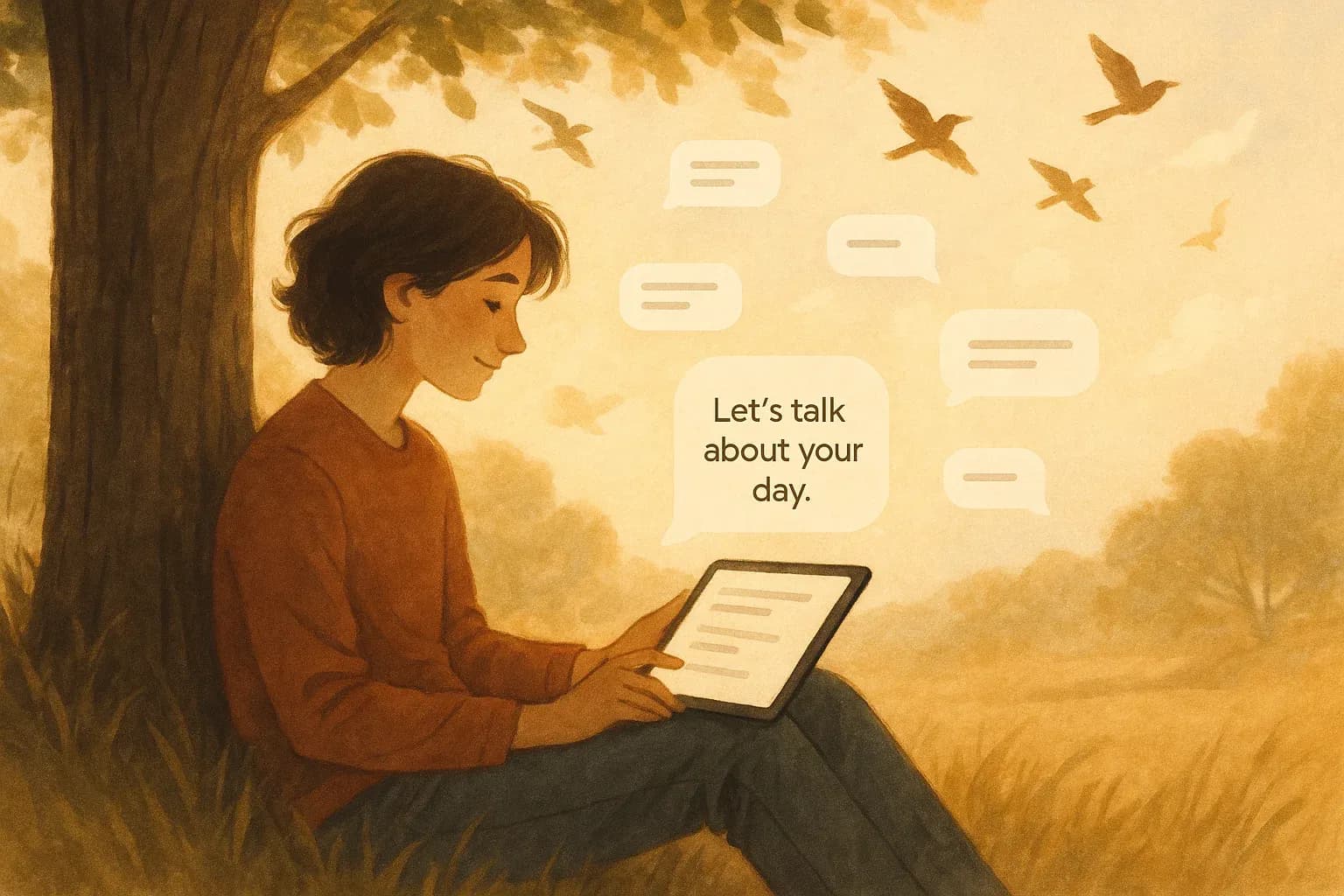
How AI is changing the way we communicate, from voice and multimodal chat to empathy and privacy, and what that means for human connection.
WTMF Team
As Evolving artificial intelligence continues, its impact on communication is becoming more profound, reshaping how we interact with machines-and each other. AI-driven tools are moving beyond transactional exchanges, offering personalized, empathetic, and secure interactions that redefine the boundaries of human-machine collaboration. Here’s how AI will transform communication in the coming years:
The future of AI communication lies in seamless integration across voice, text, image, and video channels. Advances in natural language processing (NLP) and real-time APIs now allow direct voice-to-voice interactions, cutting the lag between hearing you and responding. For instance, AI companions like WTMF already respond to your tone in real time on voice calls and adapt to your mood in chat. This multimodal approach ensures interactions feel natural and intuitive, whether users are typing, speaking, or sharing visual inputs.
AI is shifting from functional chatbots to emotionally aware companions capable of providing genuine support. Companions like WTMF use AI language models to hold nuanced conversations, pick up on how you’re feeling, and talk things through with you. More broadly, researchers in affective computing study behavioural and physiological signals, from voice tone to wearable data, with the aim of advancing wellbeing and bridging gaps in mental health support.
AI’s ability to analyze user behavior and preferences is driving bespoke communication experiences. From tailored marketing messages to adaptive learning systems, AI curates content that resonates with individual needs. For example, chatbots can recommend mindfulness exercises based on a user’s stress patterns or adjust conversational tones to align with cultural nuances. This personalization not only enhances engagement but also fosters trust and loyalty.
As data privacy concerns grow, AI communication tools need privacy by design to safeguard interactions. WTMF, for example, end-to-end encrypts your chats and journal entries, never uses them to train models, and no human reads them.
In the years ahead, AI communication will need to prioritize empathy, security, and adaptability, transforming chatbots into trusted confidants and collaborators. As WTMF and similar systems evolve, they will not only streamline tasks but also nurture human connection-proving that technology can be both intelligent and compassionate. The future of communication isn’t just about efficiency; it’s about creating meaningful, inclusive, and secure dialogues in an increasingly digital world.
Inspired by advancements in emotional AI, real-time APIs, and privacy-centric design, the next generation of communication tools will redefine how we connect-one intelligent conversation at a time.