How AI and human care can work together in mental health: where chatbots widen access, where they fall short, and why empathy still needs people.
Shreyak Singh
Human-AI Collaboration: Balancing Technology and Empathy in Mental Health Care
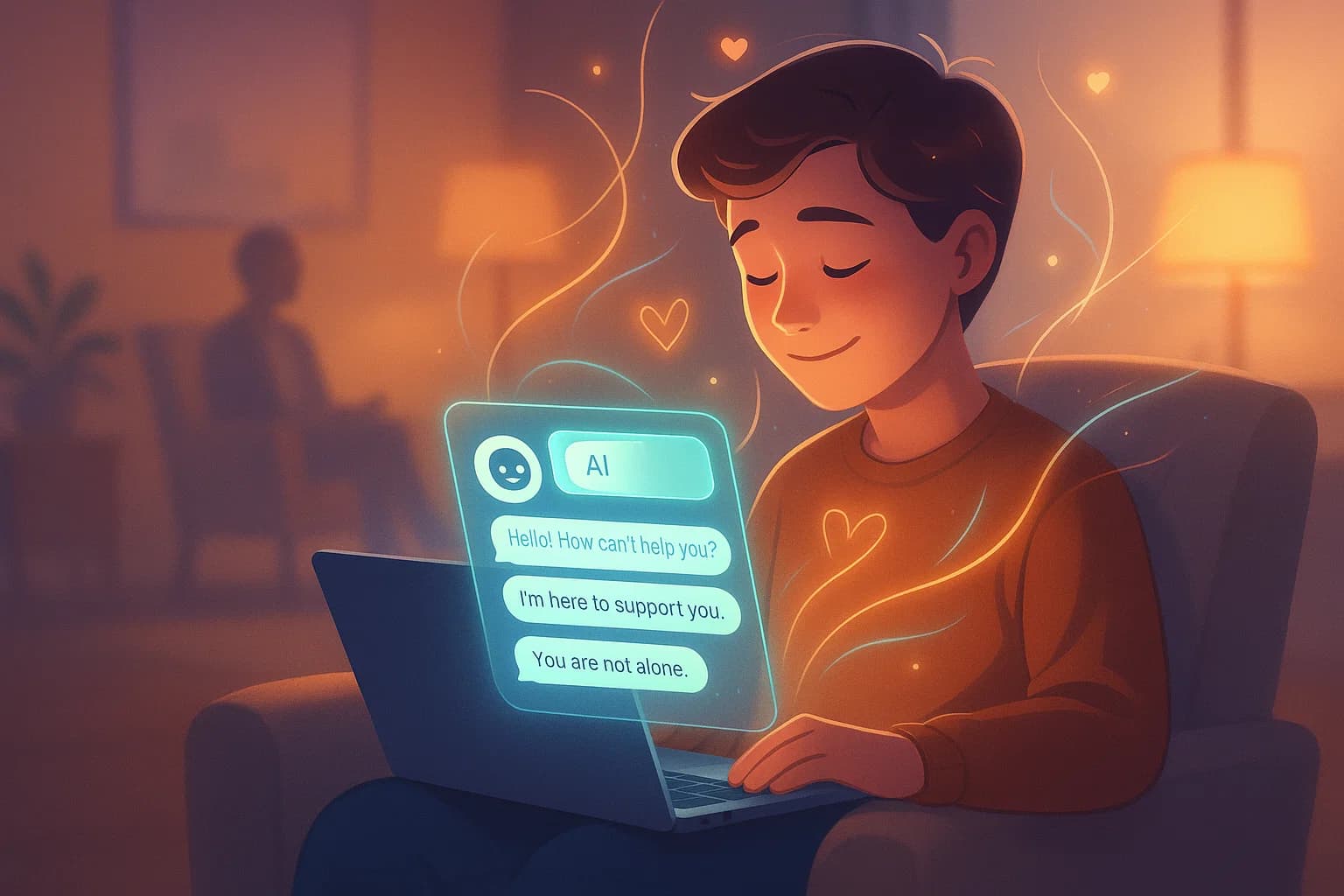
The integration of artificial intelligence into mental health care is reshaping how support is delivered, offering new hope for those who face barriers to traditional services. AI-powered chatbots and predictive tools are starting to make mental health resources more accessible, which matters in a world with a global median of 13 mental health workers per 100,000 people. In a study of 129,400 patients in England’s NHS, services using an AI self-referral chatbot saw referrals rise 15% (versus 6% in comparison services), with bigger gains among nonbinary and ethnic minority patients. These technologies can provide immediate, around-the-clock support and more personalized self-help, and some people find it easier to talk about mental health with a machine: in one experiment, people who believed they were talking to a computer rather than a human reported less fear of opening up.
Yet, as promising as AI is, its true potential is realized only when paired with human expertise. Research suggests that while large language models and chatbots can generate structured, empathetic responses, they still fall short of replicating the emotional depth, adaptability, and nuanced judgment of human therapists: in one 2025 study, current LLMs expressed stigma toward some mental health conditions and sometimes responded inappropriately, for example by encouraging delusional thinking. Human clinicians play an essential role in validating AI outputs, guiding therapeutic best practices, and providing the empathy and Mindfulness and ethical oversight that technology alone cannot match. For example, AI tools can flag at-risk individuals or suggest interventions, but human professionals are needed to interpret these insights, address crises, and ensure care is tailored to each person’s unique context.
Some of the most promising approaches are collaborative models, where AI augments human care rather than replacing it. In these systems, AI handles tasks like initial screening, symptom tracking, and suggesting evidence-based coping strategies, while human therapists oversee treatment plans, offer deep emotional support, and intervene in complex or high-risk situations. This partnership can increase the reach and efficiency of mental health services and help mitigate risks such as bias, shallow engagement, or privacy concerns.
Looking ahead, the future of mental health care will depend on striking the right balance between technological innovation and human empathy. Continued collaboration between clinicians, data scientists, and users is essential to develop AI systems that are trustworthy, secure, and culturally sensitive. With robust privacy safeguards, clinical validation, and ethical frameworks, human-AI collaboration can bridge the mental health gap-delivering scalable, personalized, and compassionate care to those who need it most.